
How to Design High-Impact Multi-Channel Video Creatives: 5 Things You Need to Have to Be Channel Fluid
Marketers today know one truth: no single platform owns the full funnel. Audiences move fluidly between Meta, YouTube, TikTok, CTV, and beyond, and they expect creative that feels natural in each environment. The challenge? Adapting your video assets across formats and audiences without breaking brand consistency or speed.
Being channel fluid isn’t about producing endless variations from scratch. It’s about building flexible creative foundations, designing with adaptability in mind, and using the right tools to scale.
Here are five essentials every multi-channel creative strategy needs:
1. Creative Flexibility
The foundation of channel fluidity is designing creative that can flex without losing impact. That starts at the storyboard. Instead of shooting one hero spot and trying to retrofit it later, teams should plan for multiple aspect ratios, pacing, and lengths at the outset. For example:
- Capture shots with multiple framings (tight, wide, vertical-safe).
- Script modular story arcs that can be shortened for TikTok or lengthened for YouTube.
- Include moments that work with or without sound, knowing audio plays differently across environments.
When you think flexibly from the start, you avoid costly reshoots and forced edits later.
With the Smartly Creative Suite, teams can instantly adapt assets to new specs—resizing, trimming, and localizing while preserving the integrity of the original concept. That means staying ahead of shifting platform requirements, without endless rounds of manual rework.
2. Audience-Centric Personalization
The best creative isn’t made for everyone. It’s made for someone. Today’s consumers expect personalization, with 74% saying they want experiences tailored to them. That could mean different product callouts by audience segment, different tone by region, or contextual relevance like time of day or weather.
Personalization goes deeper than just swapping copy or images. It’s about understanding the viewer’s journey:
- Top of funnel: Spark attention with fresh storytelling.
- Mid-funnel: Reinforce consideration with relevance, like highlighting a product they’ve already engaged with.
- Bottom of funnel: Serve creative nudges that drive conversion—offers, urgency, or reminders of abandoned carts.
Audience-first strategies build stronger connections and better performance, because they respect where the viewer is and what they need next.
3. Platform-Native Design
Every platform has its own language, and audiences know when a brand isn’t fluent. What works on YouTube doesn’t automatically work on TikTok. And a CTV spot should look and feel more cinematic than a snappy Meta ad.
Think about it in terms of sight, sound, and storytelling:
- On TikTok, ads need to blend into the For You feed, using native editing styles, trends, and vertical framing.
- On YouTube, you have longer storytelling opportunities, but the hook in the first five seconds is critical.
- On CTV, audio is almost always on, screens are larger, and attention spans are longer—so pacing, sound design, and visual clarity matter more.
Brands that repurpose one video across all platforms without these adjustments risk appearing inauthentic or, worse, invisible. Native design earns trust and attention.
4. Automation & Workflow Efficiency
Scaling video across multiple channels is where even the strongest creative ideas hit bottlenecks. Manually producing hundreds of variations (with different lengths, languages, or formats) isn’t sustainable.
Automation is the unlock. By systematizing repetitive tasks like versioning and localization, teams free up time to focus on strategy, testing, and storytelling. This isn’t about replacing creativity with machines. It’s about giving creative teams back their creative time.
Smartly’s creative suite was built to scale. It enables brands to recut, localize, and optimize assets across channels at speed, even as specs and formats evolve daily. Automation ensures you never fall behind platform updates, and governance features keep every version on-brand.
5. Consistent Measurement Across Channels
One of the hardest parts of channel fluidity is measurement. Each platform favors its own metrics—TikTok prioritizes engagement, YouTube counts views and watch time, CTV focuses on reach and completed views. Comparing apples to oranges makes it tough to understand what’s truly working.
The answer isn’t to pick one KPI and ignore the rest; it’s to create a consistent measurement framework that translates across channels. That means:
- Defining what success looks like upfront (awareness, consideration, conversion).
- Mapping platform-specific KPIs back to that shared framework.
- Utilizing unified reporting tools allows you to see performance in real-time.
With Smartly’s Media Suite, advertisers get cross-channel visibility. Features like Predictive Budget Allocation allow teams to automatically shift spend toward best-performing creatives, while real-time reach and frequency reporting eliminates wasted spend.
Looking Ahead: AI as a Creative Collaborator
AI is shifting from “production assistant” to “creative collaborator.” Instead of just automating edits, AI is now shaping strategy: generating script ideas, suggesting storyboards, and uncovering audience insights before campaigns even launch.
By strengthening the foundation in pre-production, AI helps brands produce video assets that are not only channel-ready, but also audience-ready. The result? Campaigns that perform better and last longer.
The Bottom Line
Channel fluidity isn’t about creating more—it’s about creating smarter. With adaptable assets, audience-first personalization, platform-native design, efficient workflows, and consistent measurement, brands can unlock high-impact multi-channel video campaigns that perform everywhere.
Ready to make your creative channel fluid? Get a demo.
How to Design High-Impact Multi-Channel Video Creatives: 5 Things You Need to Have to Be Channel Fluid
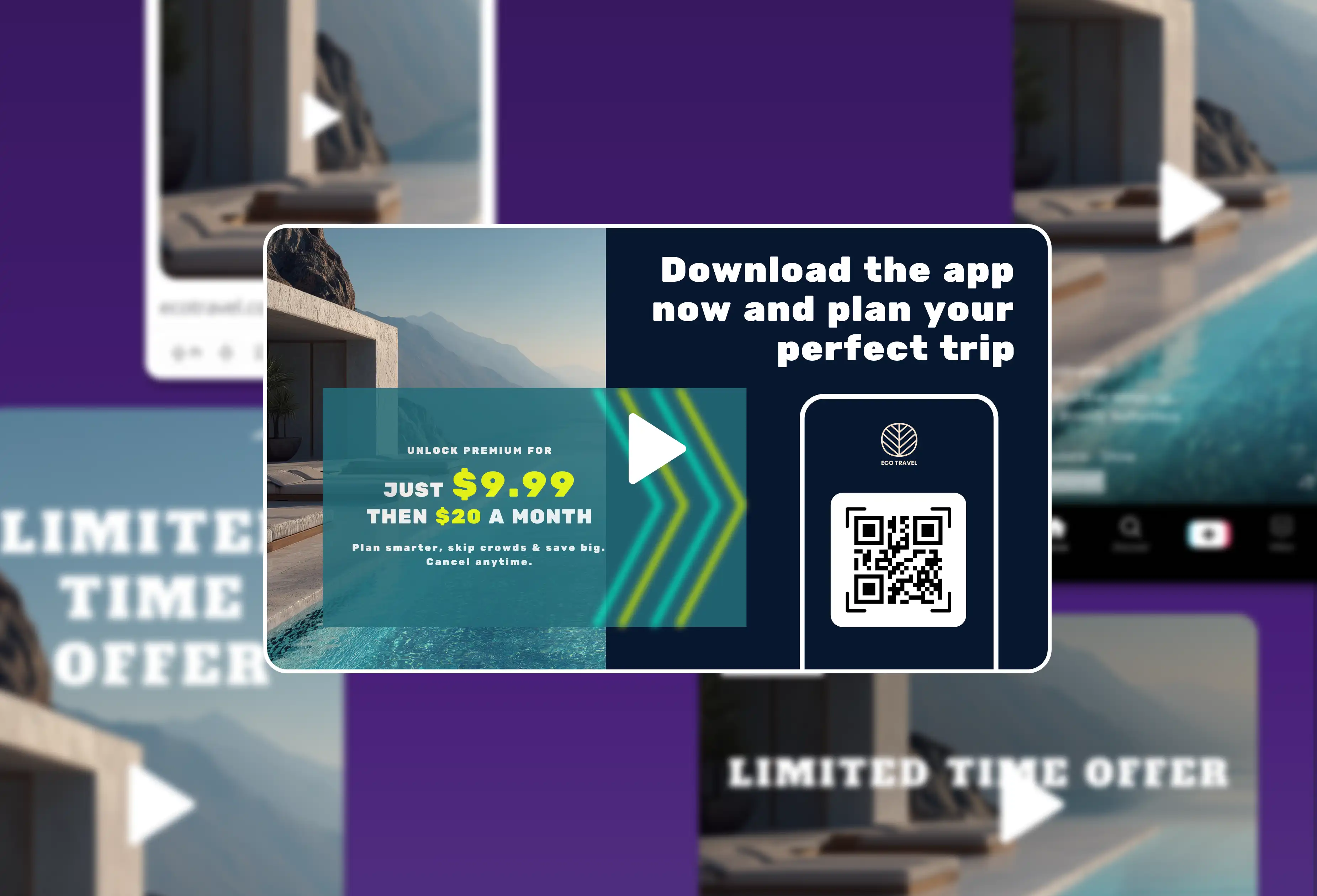

Marketers today know one truth: no single platform owns the full funnel. Audiences move fluidly between Meta, YouTube, TikTok, CTV, and beyond, and they expect creative that feels natural in each environment. The challenge? Adapting your video assets across formats and audiences without breaking brand consistency or speed.
Being channel fluid isn’t about producing endless variations from scratch. It’s about building flexible creative foundations, designing with adaptability in mind, and using the right tools to scale.
Here are five essentials every multi-channel creative strategy needs:
1. Creative Flexibility
The foundation of channel fluidity is designing creative that can flex without losing impact. That starts at the storyboard. Instead of shooting one hero spot and trying to retrofit it later, teams should plan for multiple aspect ratios, pacing, and lengths at the outset. For example:
- Capture shots with multiple framings (tight, wide, vertical-safe).
- Script modular story arcs that can be shortened for TikTok or lengthened for YouTube.
- Include moments that work with or without sound, knowing audio plays differently across environments.
When you think flexibly from the start, you avoid costly reshoots and forced edits later.
With the Smartly Creative Suite, teams can instantly adapt assets to new specs—resizing, trimming, and localizing while preserving the integrity of the original concept. That means staying ahead of shifting platform requirements, without endless rounds of manual rework.
2. Audience-Centric Personalization
The best creative isn’t made for everyone. It’s made for someone. Today’s consumers expect personalization, with 74% saying they want experiences tailored to them. That could mean different product callouts by audience segment, different tone by region, or contextual relevance like time of day or weather.
Personalization goes deeper than just swapping copy or images. It’s about understanding the viewer’s journey:
- Top of funnel: Spark attention with fresh storytelling.
- Mid-funnel: Reinforce consideration with relevance, like highlighting a product they’ve already engaged with.
- Bottom of funnel: Serve creative nudges that drive conversion—offers, urgency, or reminders of abandoned carts.
Audience-first strategies build stronger connections and better performance, because they respect where the viewer is and what they need next.
3. Platform-Native Design
Every platform has its own language, and audiences know when a brand isn’t fluent. What works on YouTube doesn’t automatically work on TikTok. And a CTV spot should look and feel more cinematic than a snappy Meta ad.
Think about it in terms of sight, sound, and storytelling:
- On TikTok, ads need to blend into the For You feed, using native editing styles, trends, and vertical framing.
- On YouTube, you have longer storytelling opportunities, but the hook in the first five seconds is critical.
- On CTV, audio is almost always on, screens are larger, and attention spans are longer—so pacing, sound design, and visual clarity matter more.
Brands that repurpose one video across all platforms without these adjustments risk appearing inauthentic or, worse, invisible. Native design earns trust and attention.
4. Automation & Workflow Efficiency
Scaling video across multiple channels is where even the strongest creative ideas hit bottlenecks. Manually producing hundreds of variations (with different lengths, languages, or formats) isn’t sustainable.
Automation is the unlock. By systematizing repetitive tasks like versioning and localization, teams free up time to focus on strategy, testing, and storytelling. This isn’t about replacing creativity with machines. It’s about giving creative teams back their creative time.
Smartly’s creative suite was built to scale. It enables brands to recut, localize, and optimize assets across channels at speed, even as specs and formats evolve daily. Automation ensures you never fall behind platform updates, and governance features keep every version on-brand.
5. Consistent Measurement Across Channels
One of the hardest parts of channel fluidity is measurement. Each platform favors its own metrics—TikTok prioritizes engagement, YouTube counts views and watch time, CTV focuses on reach and completed views. Comparing apples to oranges makes it tough to understand what’s truly working.
The answer isn’t to pick one KPI and ignore the rest; it’s to create a consistent measurement framework that translates across channels. That means:
- Defining what success looks like upfront (awareness, consideration, conversion).
- Mapping platform-specific KPIs back to that shared framework.
- Utilizing unified reporting tools allows you to see performance in real-time.
With Smartly’s Media Suite, advertisers get cross-channel visibility. Features like Predictive Budget Allocation allow teams to automatically shift spend toward best-performing creatives, while real-time reach and frequency reporting eliminates wasted spend.
Looking Ahead: AI as a Creative Collaborator
AI is shifting from “production assistant” to “creative collaborator.” Instead of just automating edits, AI is now shaping strategy: generating script ideas, suggesting storyboards, and uncovering audience insights before campaigns even launch.
By strengthening the foundation in pre-production, AI helps brands produce video assets that are not only channel-ready, but also audience-ready. The result? Campaigns that perform better and last longer.
The Bottom Line
Channel fluidity isn’t about creating more—it’s about creating smarter. With adaptable assets, audience-first personalization, platform-native design, efficient workflows, and consistent measurement, brands can unlock high-impact multi-channel video campaigns that perform everywhere.
Ready to make your creative channel fluid? Get a demo.


Honestly, we'd rather just show you.
Chat with our team to see how Smartly transforms the fragmented advertising ecosystem into something suspiciously manageable.




%201%20(1)%201%201.avif)
