
Smarter Meta Optimization Starts Here: Introducing Opportunity Score in Smartly
Marketers have no shortage of optimization signals. There are dashboards to check, metrics to monitor, recommendations to review, and performance shifts to explain before the next weekly meeting. The challenge is not finding more information. It is knowing which signals matter, what action to take, and how to move quickly without losing context.
That is why Smartly now brings Meta Opportunity Score directly into your workflow, alongside all your other social data.
Meta Opportunity Score gives advertisers a clearer view into how Meta evaluates optimization opportunities across campaigns, ad sets, and ads. In Smartly, that signal becomes easier to access, easier to evaluate, and easier to turn into smarter decisions over time.
Because optimization shouldn’t require another tab, another platform, or another round of “wait, where did that recommendation come from?”
What Is Meta Opportunity Score?
Meta Opportunity Score is a Meta-native score that helps advertisers understand how closely their campaigns align with Meta’s optimization recommendations.
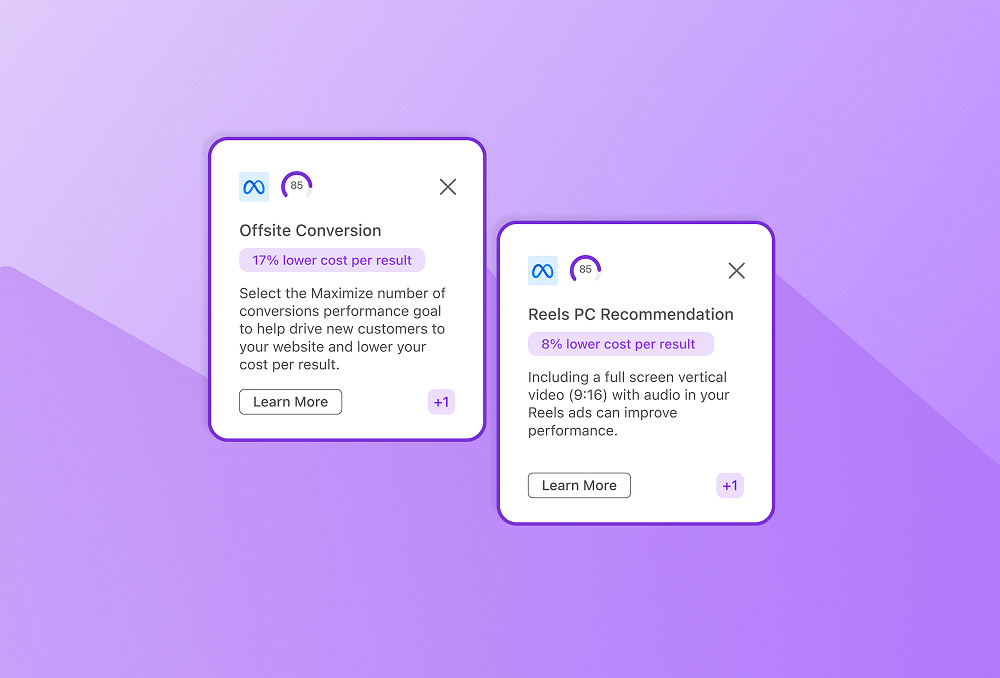
The score ranges from 0 to 100 and is paired with prioritized recommendations designed to help improve campaign setup and performance. These recommendations are ranked by expected impact, helping teams focus on the opportunities Meta believes are most important.
In other words, Opportunity Score helps answer questions like:
- Where does Meta see room for improvement?
- Which recommendations should we review first?
- Are there optimization gaps across campaigns, ad sets, or ads?
- How aligned are our campaigns with Meta’s current best practices?
It can add a valuable dimension to your overall social measurement strategy.
What Opportunity Score Is, And What It Isn’t
Opportunity Score is best understood as a campaign health signal. It gives you a structured way to see where Meta identifies potential optimizations. But it is not a replacement for your own performance data.
A higher score doesn’t automatically mean a campaign is delivering the strongest possible business results. Similarly, a lower score does not automatically mean a campaign is failing. The score reflects alignment with Meta’s recommendations, not every nuance of your audience strategy, creative approach, measurement plan, or business goal.
So the goal is not to chase a perfect 100 at all costs. The goal is to understand what the score is telling you, evaluate the recommendations behind it, and decide which actions make sense for your strategy.
That is where Smartly comes in.
The Value of Opportunity Score within Smartly
No question, Opportunity Score is a valuable metric within the Meta ecosystem. But modern advertisers rarely make decisions in just one place.
Teams are managing creative, media, reporting, budgets, approvals, automation, and performance across tools and channels. Even useful recommendations can get lost, delayed, or disconnected from the rest of the workflow.
Smartly brings Meta Opportunity Score and recommendations into the Smartly platform so teams can benefit from Meta’s optimization guidance without jumping back into Ads Manager. The integration is designed to provide visibility into the score, ranked recommendations, and the campaigns or ad sets those recommendations affect.
That means teams can:
- Get the benefit of a seamless workflow
- Review recommendations in the context of their existing campaigns and workflows
- Prioritize the opportunities most likely to drive impact
- Decide what to act on with more control and confidence
The value is not just seeing the score. It is seeing the score where decisions are already happening.
How To Interpret Your Opportunity Score
Opportunity Score is a starting point for evaluation. Here is a practical way to think about it.
A high score means strong alignment with Meta’s optimization recommendations
If your score is high, your campaigns are likely aligned with many of Meta’s recommended best practices. While that’s a good sign, it doesn’t mean the work is done.
You should still review campaign performance, creative fatigue, audience quality, budget pacing, and business outcomes. A high score can indicate healthy setup, but performance still depends on the full system working together.
A mid-range score means there may be meaningful opportunities
If your score is somewhere in the middle, start by looking at the highest-priority recommendations. These are the areas where Meta sees the greatest opportunity for improvement. Some may be simple fixes. Others may require more strategic consideration.
The key is to avoid treating every recommendation equally. Start where the potential impact is highest.
A low score means it is time to investigate
A low score does not mean “panic”. It means “pay attention”.
Look for missing setup elements, delivery constraints, budget limitations, audience restrictions, or recommendations that repeatedly appear across campaigns. Then decide which changes are worth testing, implementing, or monitoring.
How To Use Recommendations Effectively
Opportunity Score becomes most useful when teams build a clear decision process around it. Before acting on a recommendation, ask:
Is this recommendation likely to drive meaningful impact?
Because Opportunity Score includes prioritized recommendations, teams should start with the highest-impact opportunities first. This helps prevent optimization busywork and keeps attention on changes that may actually move performance.
Does this conflict with existing strategy or automation?
Smartly customers may already have automation, creative rules, budget strategies, naming structures, or internal workflows in place. Before making a change, consider how it interacts with the system you have already built. A recommendation should improve the workflow, not accidentally disrupt it.
Can we measure what happens next?
Every optimization should create a learning moment. When you act on a recommendation, track what changed, when it changed, and how performance responded. Over time, this helps your team understand which recommendations consistently create value.
Common Pitfalls To Avoid
Chasing the score instead of the outcome
A higher score can be useful, but it is not the business goal. Your real goals are stronger performance, better efficiency, smarter spend, and more confident decision-making. The score should support those outcomes, not replace them.
Treating every recommendation as mandatory
Recommendations are guidance, not commands. Some will be easy wins. Some will require testing. Smartly’s role is to help you evaluate recommendations with context, not blindly apply every suggestion.
Ignoring the score because it is platform-native
Healthy skepticism is good. Ignoring useful signals is not. Opportunity Score reflects Meta’s view of optimization opportunities, but that insight is incredibly valuable when paired with your own data, strategy, and performance context.
Reviewing the score once and moving on
Optimization is not a one-time checklist. Scores and recommendations can change as campaigns evolve. Reviewing Opportunity Score regularly helps teams spot new opportunities, understand recurring issues, and build a more consistent optimization rhythm.
From Meta Signal To Smarter Decision-Making
Meta Opportunity Score gives advertisers a clearer view into optimization opportunities. Smartly makes that signal more actionable.
By bringing Opportunity Score into Smartly, teams can access Meta’s recommendations without disrupting their workflow, evaluate those recommendations alongside their own context, and make more informed decisions over time. This also supports Smartly’s broader vision of helping advertisers turn platform-specific signals into a more unified performance intelligence layer.
Because smarter optimization is not about doing everything the platform suggests, but about knowing what matters, acting with intention, and building a better system for performance over time.
Smarter Meta optimization starts here.
Smarter Meta Optimization Starts Here: Introducing Opportunity Score in Smartly

Marketers have no shortage of optimization signals. There are dashboards to check, metrics to monitor, recommendations to review, and performance shifts to explain before the next weekly meeting. The challenge is not finding more information. It is knowing which signals matter, what action to take, and how to move quickly without losing context.
That is why Smartly now brings Meta Opportunity Score directly into your workflow, alongside all your other social data.
Meta Opportunity Score gives advertisers a clearer view into how Meta evaluates optimization opportunities across campaigns, ad sets, and ads. In Smartly, that signal becomes easier to access, easier to evaluate, and easier to turn into smarter decisions over time.
Because optimization shouldn’t require another tab, another platform, or another round of “wait, where did that recommendation come from?”
What Is Meta Opportunity Score?
Meta Opportunity Score is a Meta-native score that helps advertisers understand how closely their campaigns align with Meta’s optimization recommendations.
The score ranges from 0 to 100 and is paired with prioritized recommendations designed to help improve campaign setup and performance. These recommendations are ranked by expected impact, helping teams focus on the opportunities Meta believes are most important.
In other words, Opportunity Score helps answer questions like:
- Where does Meta see room for improvement?
- Which recommendations should we review first?
- Are there optimization gaps across campaigns, ad sets, or ads?
- How aligned are our campaigns with Meta’s current best practices?
It can add a valuable dimension to your overall social measurement strategy.
What Opportunity Score Is, And What It Isn’t
Opportunity Score is best understood as a campaign health signal. It gives you a structured way to see where Meta identifies potential optimizations. But it is not a replacement for your own performance data.
A higher score doesn’t automatically mean a campaign is delivering the strongest possible business results. Similarly, a lower score does not automatically mean a campaign is failing. The score reflects alignment with Meta’s recommendations, not every nuance of your audience strategy, creative approach, measurement plan, or business goal.
So the goal is not to chase a perfect 100 at all costs. The goal is to understand what the score is telling you, evaluate the recommendations behind it, and decide which actions make sense for your strategy.
That is where Smartly comes in.
The Value of Opportunity Score within Smartly
No question, Opportunity Score is a valuable metric within the Meta ecosystem. But modern advertisers rarely make decisions in just one place.
Teams are managing creative, media, reporting, budgets, approvals, automation, and performance across tools and channels. Even useful recommendations can get lost, delayed, or disconnected from the rest of the workflow.
Smartly brings Meta Opportunity Score and recommendations into the Smartly platform so teams can benefit from Meta’s optimization guidance without jumping back into Ads Manager. The integration is designed to provide visibility into the score, ranked recommendations, and the campaigns or ad sets those recommendations affect.
That means teams can:
- Get the benefit of a seamless workflow
- Review recommendations in the context of their existing campaigns and workflows
- Prioritize the opportunities most likely to drive impact
- Decide what to act on with more control and confidence
The value is not just seeing the score. It is seeing the score where decisions are already happening.
How To Interpret Your Opportunity Score
Opportunity Score is a starting point for evaluation. Here is a practical way to think about it.
A high score means strong alignment with Meta’s optimization recommendations
If your score is high, your campaigns are likely aligned with many of Meta’s recommended best practices. While that’s a good sign, it doesn’t mean the work is done.
You should still review campaign performance, creative fatigue, audience quality, budget pacing, and business outcomes. A high score can indicate healthy setup, but performance still depends on the full system working together.
A mid-range score means there may be meaningful opportunities
If your score is somewhere in the middle, start by looking at the highest-priority recommendations. These are the areas where Meta sees the greatest opportunity for improvement. Some may be simple fixes. Others may require more strategic consideration.
The key is to avoid treating every recommendation equally. Start where the potential impact is highest.
A low score means it is time to investigate
A low score does not mean “panic”. It means “pay attention”.
Look for missing setup elements, delivery constraints, budget limitations, audience restrictions, or recommendations that repeatedly appear across campaigns. Then decide which changes are worth testing, implementing, or monitoring.
How To Use Recommendations Effectively
Opportunity Score becomes most useful when teams build a clear decision process around it. Before acting on a recommendation, ask:
Is this recommendation likely to drive meaningful impact?
Because Opportunity Score includes prioritized recommendations, teams should start with the highest-impact opportunities first. This helps prevent optimization busywork and keeps attention on changes that may actually move performance.
Does this conflict with existing strategy or automation?
Smartly customers may already have automation, creative rules, budget strategies, naming structures, or internal workflows in place. Before making a change, consider how it interacts with the system you have already built. A recommendation should improve the workflow, not accidentally disrupt it.
Can we measure what happens next?
Every optimization should create a learning moment. When you act on a recommendation, track what changed, when it changed, and how performance responded. Over time, this helps your team understand which recommendations consistently create value.
Common Pitfalls To Avoid
Chasing the score instead of the outcome
A higher score can be useful, but it is not the business goal. Your real goals are stronger performance, better efficiency, smarter spend, and more confident decision-making. The score should support those outcomes, not replace them.
Treating every recommendation as mandatory
Recommendations are guidance, not commands. Some will be easy wins. Some will require testing. Smartly’s role is to help you evaluate recommendations with context, not blindly apply every suggestion.
Ignoring the score because it is platform-native
Healthy skepticism is good. Ignoring useful signals is not. Opportunity Score reflects Meta’s view of optimization opportunities, but that insight is incredibly valuable when paired with your own data, strategy, and performance context.
Reviewing the score once and moving on
Optimization is not a one-time checklist. Scores and recommendations can change as campaigns evolve. Reviewing Opportunity Score regularly helps teams spot new opportunities, understand recurring issues, and build a more consistent optimization rhythm.
From Meta Signal To Smarter Decision-Making
Meta Opportunity Score gives advertisers a clearer view into optimization opportunities. Smartly makes that signal more actionable.
By bringing Opportunity Score into Smartly, teams can access Meta’s recommendations without disrupting their workflow, evaluate those recommendations alongside their own context, and make more informed decisions over time. This also supports Smartly’s broader vision of helping advertisers turn platform-specific signals into a more unified performance intelligence layer.
Because smarter optimization is not about doing everything the platform suggests, but about knowing what matters, acting with intention, and building a better system for performance over time.
Smarter Meta optimization starts here.



Honestly, we'd rather just show you.
Chat with our team to see how Smartly transforms the fragmented advertising ecosystem into something suspiciously manageable.




%201%20(1)%201%201.avif)

