
Dispatches from La Croisette: Four Takeaways from Cannes Lions 2026
Cannes Lions has wrapped, and those who attended are on their way out, taking planes, trains, and yachts to their next destination.
This year, the installations at Cannes were grander, the parties more plentiful, and the diversity of industries represented on the ground was staggering. Marketing mingled with tech, global brands, creators, and Hollywood stars for what the French call ‘un congrès’ about creativity.
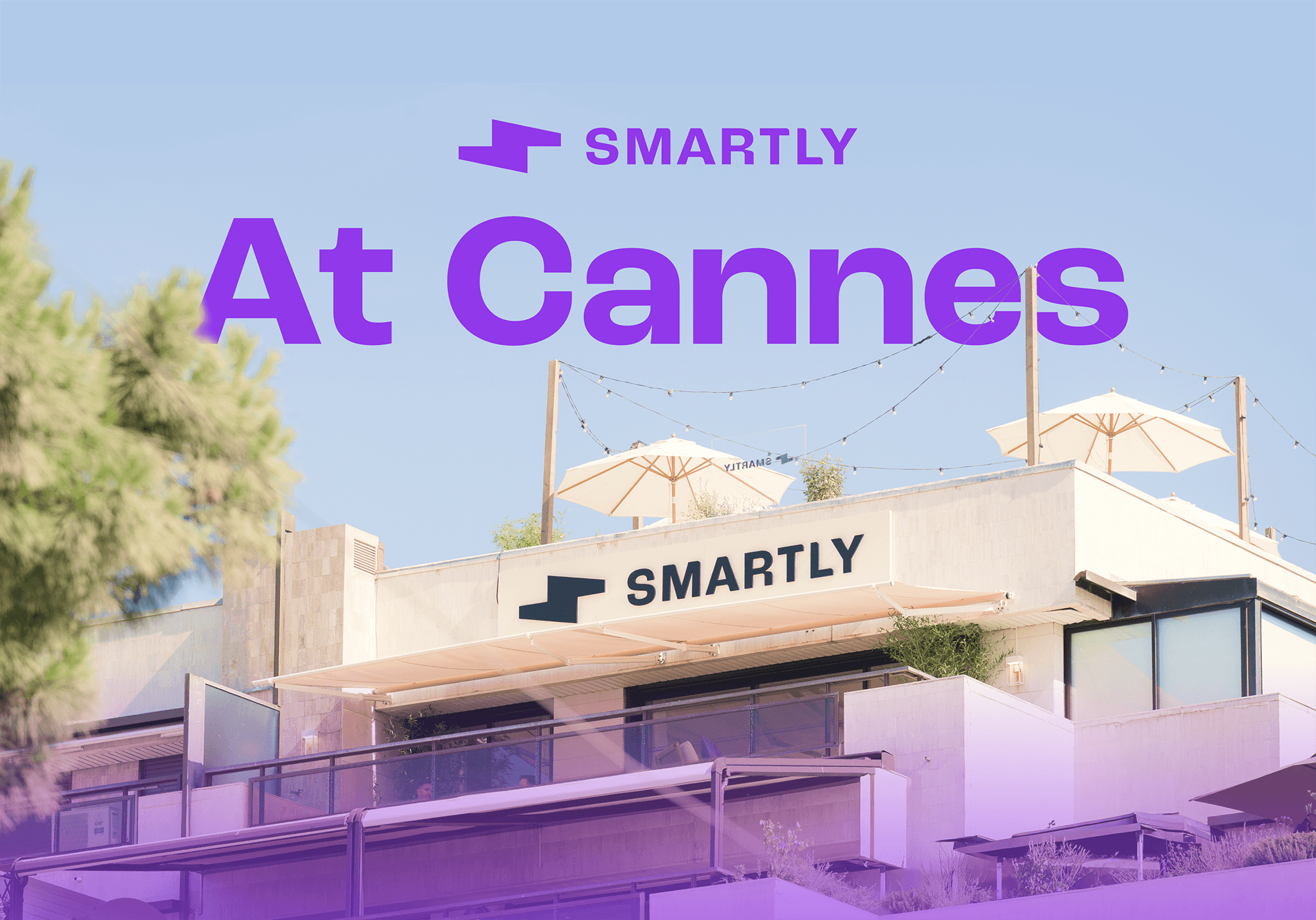
Smartly hosted three days of programming in our penthouse, including a comedy show, a fragrance workshop, concept-driven meals, and, of course, panels. We welcomed industry leaders like WPP CEO Cindy Rose, OBE, WNBA legend Diana Taurasi, comedian Matthew Broussard, and many more. In between sessions, I also managed to peel myself away long enough to pound the pavement on La Croisette, sweat through several shirts, and get a pulse check on what everyone else was talking about. Here's what stood out.
Personalization reigns supreme
The most popular activations were ones that offered personalization. A custom-printed postcard, a bracelet with hand-picked charms, a tattoo, if you’re brave—these were the things that people wanted the most. But personalization extended beyond just a theme for activation keepsakes. It was also a topic among panels and thought leadership.
Personalization has never been easier, with the quantity of data available to us and the speed at which we can use it. But effective personalization comes from keeping it simple. Use the right data, not all the data. Hyper-targeting is effective, but something as simple as writing a customer’s name on the side of a coffee cup can be the most effective tactic of all.
One of my favorite personalization moments at Cannes was at Pinterest Manifestal, where they had a functioning post box and a wide selection of post cards, so you could send someone a note directly from their space. Personally, I wrote one for my mom. She’s always loved sending postcards from vacation.
AI for growth > AI for efficiency
AI felt like table stakes this year, rather than a novelty. Its maturity has changed how it's discussed. Three or four years ago, we marveled at the time and money we could save with these tools, and those savings are still marvelous. But as one speaker noted in a Thursday morning panel, you can’t cut your way to prosperity. Applying AI for growth is as crucial as applying it for efficiency.
One executive from a retail brand pointed to using AI to accelerate qualitative research—doing it at the speed of quant, as he said—to quickly understand consumer sentiment, adapt products accordingly, and drive sales. This specific framing of AI implementation felt like it held promise to be additive, rather than reductive.
Bye-bye, silos
Another major offshoot of large-scale enterprise AI adoption has been org transformation. This year, much of that conversation hinged on breaking down silos, whether that's between paid and organic or brand and performance. AI has given creatives performance goals and vice versa. But if those teams are taking on each other's work without talking to one another, it only exacerbates duplicated work and holds back a company's ability to expand and innovate.
Bridging those gaps doesn't have to start with a reorg. It can be as simple as inviting a performance marketer to a creative review, asking your brand team to join a campaign readout, or getting your paid and organic teams to look at the same reporting together.
As one exec from a global hospitality brand put it, today's workers are evaluated on their ability to solve problems together, not on their ability to complete individual tasks. They can only do that if they are set up to work together.
Fandoms: Secret sauce for brand-building
Arguably one of the buzziest topics of conversation was fandoms—leaned-in communities who rally ferociously around creators, niches, shows, sports leagues, you name it. These communities have longevity and loyalty: two things that are scarce in marketing these days, though nonetheless crucial for brand-building.
This was central to the discussion during our panel, Live Sports Can't Wait. And Neither Can Your Creative. Diana Taurasi joined execs from SharkNinja, MassMutual, and Amazon for a conversation about tapping into culture during live sports in a way that's meaningful for the fans, the athletes, and the brand.
The common thread was relationship-building. Fandoms have their own subcultures, with unique in-jokes, lingo, and traditions. Going just one layer beneath the surface to understand those communities can make all the difference. Taurasi noted that the best partnerships begin with taking the time to understand the athlete before asking them to tell a story. She reflected on collaborating with a longtime brand partner to design a shoe that would help her perform at her best every day, not just to look cool. That kind of collaboration builds trust long before it becomes a campaign.
À la prochaine fois
By the time we publish this, the branded cabanas will be packed away, and La Croisette will go back to being just another stretch of coastline. It'll be like the festival never happened, all those panels and activations gone, like dew evaporating into thin air.
But the conversations have a way of lingering. They show up in next year's campaigns, org charts, product roadmaps, and the questions marketers ask themselves long after the Riviera empties out. We'll see how many of this year's predictions come true.
Dispatches from La Croisette: Four Takeaways from Cannes Lions 2026
Cannes Lions has wrapped, and those who attended are on their way out, taking planes, trains, and yachts to their next destination.
This year, the installations at Cannes were grander, the parties more plentiful, and the diversity of industries represented on the ground was staggering. Marketing mingled with tech, global brands, creators, and Hollywood stars for what the French call ‘un congrès’ about creativity.
Smartly hosted three days of programming in our penthouse, including a comedy show, a fragrance workshop, concept-driven meals, and, of course, panels. We welcomed industry leaders like WPP CEO Cindy Rose, OBE, WNBA legend Diana Taurasi, comedian Matthew Broussard, and many more. In between sessions, I also managed to peel myself away long enough to pound the pavement on La Croisette, sweat through several shirts, and get a pulse check on what everyone else was talking about. Here's what stood out.
Personalization reigns supreme
The most popular activations were ones that offered personalization. A custom-printed postcard, a bracelet with hand-picked charms, a tattoo, if you’re brave—these were the things that people wanted the most. But personalization extended beyond just a theme for activation keepsakes. It was also a topic among panels and thought leadership.
Personalization has never been easier, with the quantity of data available to us and the speed at which we can use it. But effective personalization comes from keeping it simple. Use the right data, not all the data. Hyper-targeting is effective, but something as simple as writing a customer’s name on the side of a coffee cup can be the most effective tactic of all.
One of my favorite personalization moments at Cannes was at Pinterest Manifestal, where they had a functioning post box and a wide selection of post cards, so you could send someone a note directly from their space. Personally, I wrote one for my mom. She’s always loved sending postcards from vacation.
AI for growth > AI for efficiency
AI felt like table stakes this year, rather than a novelty. Its maturity has changed how it's discussed. Three or four years ago, we marveled at the time and money we could save with these tools, and those savings are still marvelous. But as one speaker noted in a Thursday morning panel, you can’t cut your way to prosperity. Applying AI for growth is as crucial as applying it for efficiency.
One executive from a retail brand pointed to using AI to accelerate qualitative research—doing it at the speed of quant, as he said—to quickly understand consumer sentiment, adapt products accordingly, and drive sales. This specific framing of AI implementation felt like it held promise to be additive, rather than reductive.
Bye-bye, silos
Another major offshoot of large-scale enterprise AI adoption has been org transformation. This year, much of that conversation hinged on breaking down silos, whether that's between paid and organic or brand and performance. AI has given creatives performance goals and vice versa. But if those teams are taking on each other's work without talking to one another, it only exacerbates duplicated work and holds back a company's ability to expand and innovate.
Bridging those gaps doesn't have to start with a reorg. It can be as simple as inviting a performance marketer to a creative review, asking your brand team to join a campaign readout, or getting your paid and organic teams to look at the same reporting together.
As one exec from a global hospitality brand put it, today's workers are evaluated on their ability to solve problems together, not on their ability to complete individual tasks. They can only do that if they are set up to work together.
Fandoms: Secret sauce for brand-building
Arguably one of the buzziest topics of conversation was fandoms—leaned-in communities who rally ferociously around creators, niches, shows, sports leagues, you name it. These communities have longevity and loyalty: two things that are scarce in marketing these days, though nonetheless crucial for brand-building.
This was central to the discussion during our panel, Live Sports Can't Wait. And Neither Can Your Creative. Diana Taurasi joined execs from SharkNinja, MassMutual, and Amazon for a conversation about tapping into culture during live sports in a way that's meaningful for the fans, the athletes, and the brand.
The common thread was relationship-building. Fandoms have their own subcultures, with unique in-jokes, lingo, and traditions. Going just one layer beneath the surface to understand those communities can make all the difference. Taurasi noted that the best partnerships begin with taking the time to understand the athlete before asking them to tell a story. She reflected on collaborating with a longtime brand partner to design a shoe that would help her perform at her best every day, not just to look cool. That kind of collaboration builds trust long before it becomes a campaign.
À la prochaine fois
By the time we publish this, the branded cabanas will be packed away, and La Croisette will go back to being just another stretch of coastline. It'll be like the festival never happened, all those panels and activations gone, like dew evaporating into thin air.
But the conversations have a way of lingering. They show up in next year's campaigns, org charts, product roadmaps, and the questions marketers ask themselves long after the Riviera empties out. We'll see how many of this year's predictions come true.


Honestly, we'd rather just show you.
Chat with our team to see how Smartly transforms the fragmented advertising ecosystem into something suspiciously manageable.


%201%20(1)%201%201.avif)

