
From Fugees to Futures: Wyclef Jean’s 3 Rules for Marketers in the AI Carnival
Three-time Grammy Award winner and co-founder of The Fugees, Wyclef Jean, took the stage at ADVANCE 2025 in September with a message every marketer in the room needed to hear: AI may change the tools, the tempo, and the scale, but creativity still belongs to humans.
Jean’s 1997 album The Carnival was a cultural mosaic: rap, Creole, world music, storytelling, and a boundary-breaking fusion that defined a generation. Today’s marketing landscape feels like its own kind of carnival: crowded, loud, always shifting, and filled with unexpected collisions of technology and culture. And Jean’s point was unmistakable: the same instincts that helped him remix genres now help us remix possibilities in the age of AI.
“I am the master of me, AI is not the master,” he told the crowd. It wasn’t a dismissal of AI, but a reminder that its power only matters when it amplifies the human behind it.
Here are Wyclef’s three rules for building, creating, and staying resilient in this new era.
AI is the Amplifier, Not the Replacement
The Science of Sound Meets the Science of Strategy
Jean didn’t tiptoe around the elephant in the room. The fear that AI will eventually replace artists, writers, producers, or marketers was something he addressed head on:
“AI can’t replace creativity… it’s impossible.”
For him, AI is part of the toolkit, like a guitar pedal or a mixing board. It multiplies what a human can do, but it can’t originate the soul that makes a song, a line, or an idea unforgettable.
Drawing comparisons between classical music, coding, and philosophy, Wyclef pointed out that every great composer understood “the complication of classical music, the math.” The structure matters. The theory matters. Techniques matter.
But math never replaces the musician. It simply gives them new ways to express what only they can feel.
His example? Battle rapping.
What he called “lyrical gymnastics” trained him to think fast, play with language, and sharpen his instinct for what makes a line emotionally true. That sharpness beat machines before, and in his words, will continue to beat machines now. Even his playful “battle rap” with ChatGPT showed that emotion, humor, and human intuition still win.
What This Means for Marketers
AI unlocks speed, scale, and experimentation:
- Near-zero production cost
- Instant variations
- Predictive insights
- Faster testing cycles
But humans supply the spark:
- Empathy
- Instinct
- Storytelling
- Brand voice
- Cultural relevance
Marketers who pair both AI’s scale with human strategy win bigger, faster, and more creatively.
AI does the heavy lifting. Humans deliver the meaning.
Go Beyond the Data
Why Cultural Currency Is the Real Performance Driver
Wyclef’s second rule was a call-out to the room:
Data alone isn’t enough to understand culture.
“Brands must go beyond the data,” he said. That’s because culture isn’t a spreadsheet—it's lived experience. It’s the difference between talking at communities and speaking with them.
Cultural currency, in his words, is the power artists carry because they shape what people feel, follow, and believe. Whether you’re tapping into Brooklyn basslines, Nigerian rhythms, Brazilian street energy, or LA style, culture requires immersion, not inference.
He used The Carnival as a metaphor. Its core philosophy? “The greatest nations are formed when all put our heads together as immigrants.”
That is cultural fusion. That is authenticity. And that is the marketing advantage most brands miss when they rely only on targeting data or trend reports.
What This Means for Marketers
Culture is earned.
Gen Z, in particular, has a zero-tolerance policy for inauthenticity. Brands get one chance to show they understand the world their audience lives in, not the world the dashboard describes.
To build cultural currency:
- Work with creators who live the culture you want to reach.
- Listen to the communities you’re trying to represent.
- Let diverse voices shape your creative process.
- Treat data as the starting point, not the final say.
In a synthetic content universe, authenticity becomes priceless.
Policies and Perseverance
The Creator Economy Needs Guardrails and Grit
Today’s artists earn their living through merch and concerts, not streams. “The money that the artist is going to make is no longer a streaming service. It's building your brand… people showing up, buying your merch.”
And that shift mirrors what’s happening to creators across every industry, including marketing.
Creators now are businesses. But businesses need protection. With AI able to mimic voices, faces, and styles in minutes, Jean warned that we’re in the “Wild Wild West” until policies catch up. Without laws, creators lose control of their identities and their income.
But he balanced that with hope. Generative AI, he noted, has given “young filmmakers” and creators access to tools only studios once controlled. It’s democratizing production, not destroying it.
What This Means for Marketers
The future belongs to brands and creators that are:
- IP-aware
- Ethically grounded
- Informed about AI risks
- Committed to creator equity
- Building direct relationships with communities
This is a moment to champion human creators, not replace them. To use AI to uplift new voices, not drown them out.
Wyclef’s Final Rule: Resilience Is Your Competitive Advantage
Wyclef ended with a philosophy rooted in Confucius, remixed with his own lived experience:
“It’s not really what you do when you fall, it’s when you get back up.”
In the AI carnival, marketers will experiment, fail, adjust, and remix again and again.
That’s the job now. That’s the opportunity.
The tools are evolving daily. The culture is shifting faster than ever. And the brands that keep showing up curious, creative, and culturally aware will shape what comes next.
AI won’t define the future. Humans who know how to wield it will.
ADVANCE 2025 is only the beginning. The revolutionary ideas shared in New York are already reshaping marketing, and if you weren’t in the room, these recaps are your next best bet. More takeaways will be rolling out in the coming months. Stay tuned, to make sure you can stay ahead.
Join the conversation with #ADVANCE2025 on LinkedIn.
From Fugees to Futures: Wyclef Jean’s 3 Rules for Marketers in the AI Carnival
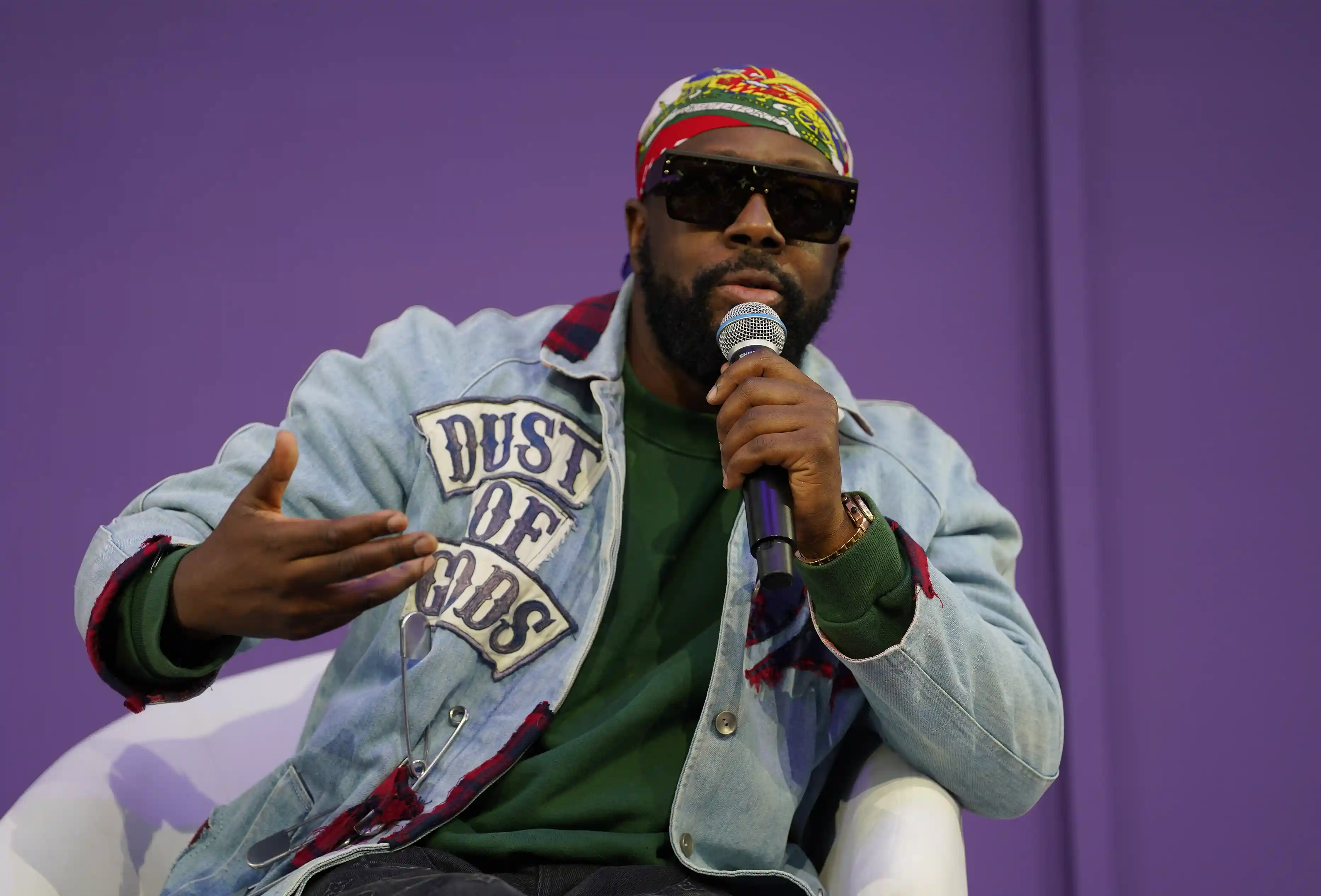

Three-time Grammy Award winner and co-founder of The Fugees, Wyclef Jean, took the stage at ADVANCE 2025 in September with a message every marketer in the room needed to hear: AI may change the tools, the tempo, and the scale, but creativity still belongs to humans.
Jean’s 1997 album The Carnival was a cultural mosaic: rap, Creole, world music, storytelling, and a boundary-breaking fusion that defined a generation. Today’s marketing landscape feels like its own kind of carnival: crowded, loud, always shifting, and filled with unexpected collisions of technology and culture. And Jean’s point was unmistakable: the same instincts that helped him remix genres now help us remix possibilities in the age of AI.
“I am the master of me, AI is not the master,” he told the crowd. It wasn’t a dismissal of AI, but a reminder that its power only matters when it amplifies the human behind it.
Here are Wyclef’s three rules for building, creating, and staying resilient in this new era.
AI is the Amplifier, Not the Replacement
The Science of Sound Meets the Science of Strategy
Jean didn’t tiptoe around the elephant in the room. The fear that AI will eventually replace artists, writers, producers, or marketers was something he addressed head on:
“AI can’t replace creativity… it’s impossible.”
For him, AI is part of the toolkit, like a guitar pedal or a mixing board. It multiplies what a human can do, but it can’t originate the soul that makes a song, a line, or an idea unforgettable.
Drawing comparisons between classical music, coding, and philosophy, Wyclef pointed out that every great composer understood “the complication of classical music, the math.” The structure matters. The theory matters. Techniques matter.
But math never replaces the musician. It simply gives them new ways to express what only they can feel.
His example? Battle rapping.
What he called “lyrical gymnastics” trained him to think fast, play with language, and sharpen his instinct for what makes a line emotionally true. That sharpness beat machines before, and in his words, will continue to beat machines now. Even his playful “battle rap” with ChatGPT showed that emotion, humor, and human intuition still win.
What This Means for Marketers
AI unlocks speed, scale, and experimentation:
- Near-zero production cost
- Instant variations
- Predictive insights
- Faster testing cycles
But humans supply the spark:
- Empathy
- Instinct
- Storytelling
- Brand voice
- Cultural relevance
Marketers who pair both AI’s scale with human strategy win bigger, faster, and more creatively.
AI does the heavy lifting. Humans deliver the meaning.
Go Beyond the Data
Why Cultural Currency Is the Real Performance Driver
Wyclef’s second rule was a call-out to the room:
Data alone isn’t enough to understand culture.
“Brands must go beyond the data,” he said. That’s because culture isn’t a spreadsheet—it's lived experience. It’s the difference between talking at communities and speaking with them.
Cultural currency, in his words, is the power artists carry because they shape what people feel, follow, and believe. Whether you’re tapping into Brooklyn basslines, Nigerian rhythms, Brazilian street energy, or LA style, culture requires immersion, not inference.
He used The Carnival as a metaphor. Its core philosophy? “The greatest nations are formed when all put our heads together as immigrants.”
That is cultural fusion. That is authenticity. And that is the marketing advantage most brands miss when they rely only on targeting data or trend reports.
What This Means for Marketers
Culture is earned.
Gen Z, in particular, has a zero-tolerance policy for inauthenticity. Brands get one chance to show they understand the world their audience lives in, not the world the dashboard describes.
To build cultural currency:
- Work with creators who live the culture you want to reach.
- Listen to the communities you’re trying to represent.
- Let diverse voices shape your creative process.
- Treat data as the starting point, not the final say.
In a synthetic content universe, authenticity becomes priceless.
Policies and Perseverance
The Creator Economy Needs Guardrails and Grit
Today’s artists earn their living through merch and concerts, not streams. “The money that the artist is going to make is no longer a streaming service. It's building your brand… people showing up, buying your merch.”
And that shift mirrors what’s happening to creators across every industry, including marketing.
Creators now are businesses. But businesses need protection. With AI able to mimic voices, faces, and styles in minutes, Jean warned that we’re in the “Wild Wild West” until policies catch up. Without laws, creators lose control of their identities and their income.
But he balanced that with hope. Generative AI, he noted, has given “young filmmakers” and creators access to tools only studios once controlled. It’s democratizing production, not destroying it.
What This Means for Marketers
The future belongs to brands and creators that are:
- IP-aware
- Ethically grounded
- Informed about AI risks
- Committed to creator equity
- Building direct relationships with communities
This is a moment to champion human creators, not replace them. To use AI to uplift new voices, not drown them out.
Wyclef’s Final Rule: Resilience Is Your Competitive Advantage
Wyclef ended with a philosophy rooted in Confucius, remixed with his own lived experience:
“It’s not really what you do when you fall, it’s when you get back up.”
In the AI carnival, marketers will experiment, fail, adjust, and remix again and again.
That’s the job now. That’s the opportunity.
The tools are evolving daily. The culture is shifting faster than ever. And the brands that keep showing up curious, creative, and culturally aware will shape what comes next.
AI won’t define the future. Humans who know how to wield it will.
ADVANCE 2025 is only the beginning. The revolutionary ideas shared in New York are already reshaping marketing, and if you weren’t in the room, these recaps are your next best bet. More takeaways will be rolling out in the coming months. Stay tuned, to make sure you can stay ahead.
Join the conversation with #ADVANCE2025 on LinkedIn.


Honestly, we'd rather just show you.
Chat with our team to see how Smartly transforms the fragmented advertising ecosystem into something suspiciously manageable.


%201%20(1)%201%201.avif)

