
Measurement Isn’t the Problem: Decisioning Is
As any smart marketer will tell you, measurement alone isn't a strategy. It’s absolutely essential (and never won’t be), but it’s not enough on its own. Historically, measurement solutions provided insights into what happened after a campaign finished. Unfortunately, despite evolutions in measurement, marketers today still deal with fragmented channels and tools, and are left struggling to translate post-campaign insights into action before they become irrelevant.
In this era of advertising, the brands that turn measurement into real-time decisioning are quickly taking the lead.
Measurement is a Signal to Activate (Not the Whole Strategy)
For years, measurement has been treated like the finish line. Launch the campaign, review the results of the campaign, share what worked, and then optimize for the next round. It’s become a familiar rhythm, but it isn’t at scale.
What if instead of only reviewing the results at the end, we check in on them periodically throughout the campaign? Taking frequent snapshots to review the results and make tactical adjustments so you have time to learn from the insights while they’re still relevant, instead of waiting until it’s too late.
Today’s advertising moves too quickly for insights that are only available after budget has been spent. By the time a campaign has ended, behavior may have shifted and the next campaign may already be in motion.
Here, measurement is still valuable, but it can’t sit at the end of the process. The true value comes from what marketers can do with their data. In an ideal world, it guides budget shifts, creative decisions, and channel strategy, all while there’s still time to improve performance.
Dashboards Create More Questions than Answers
The modern marketing stack gives teams plenty to review. Every platform has its own version of performance, with each report arriving with a slightly different version of the truth. With an increase in visibility often comes a decrease in clarity, particularly with multiple dashboards to manage.
That’s why the conversation needs to move beyond measurement to omni-channel systems that help marketers understand which actions are worth taking and give them the confidence to act while they can move the needle. (Otherwise, they’re left translating data into decisions manually, which is a lot to ask from people who already have seventeen tabs open and a meeting invite for a “quick sync.”)
Incrementality Turns Measurement into Momentum
That’s why incrementality is increasingly becoming the industry standard when it comes to measurement. Incrementality helps marketers understand what their campaigns actually caused (and which initiatives should get credit for influencing results), not just what happened while those campaigns were running. That difference is critical. Without it, teams can over-credit channels, misread performance, or optimize toward activity that looks productive but does not create meaningful growth.
The opportunity now is to make incrementality more continuous and connected to activation. Instead of treating it as a retrospective report, brands can use always-on incrementality signals to guide optimization across channels. This makes measurement more actionable because it becomes part of how decisions are made in real time.
With continuous incrementality, marketers can ask better questions while campaigns are still moving, like...
- Where is spend creating true lift?
- Which channels are contributing incremental value?
- Which creative choices are helping performance (and which ones are just along for the ride)?
The Growth Loop Has to be Connected
The best marketing systems connect the entire workflow, from planning to activation and optimization to proof.
Modern advertising decisions are not isolated, with planning affecting activation, activation affecting optimization, and so on. In many organizations, those steps are still disconnected, happening in siloed tools across different teams. Without someone manually connecting the dots across dashboards and channels, key growth opportunities are missed.
Smartly’s new acquisition of INCRMNTAL solves this by creating a more unified system that brings causal measurement closer to activation. Instead of treating incrementality as something marketers check after a campaign has run, it becomes part of how campaigns are planned and executed.
The result is a smarter decisioning loop where marketers can move from fragmented attribution to real-time, causal optimization.
The Advantage Belongs To Better Decision-Makers
The best marketing teams are not the ones with the most dashboards (although maybe there should be an award for that?). In 2026 and beyond, effective marketing teams decide faster and optimize for incremental impact.
Measurement will always be essential, but it will never be the whole strategy. It becomes powerful when it helps teams optimize faster, reduce waste, and invest in opportunities that create true incremental impact.
Marketers need clearer decisions, connected workflows, and confidence that every optimization is moving them closer to growth. That is the shift from measurement to decisioning, and it is where modern advertising is headed.
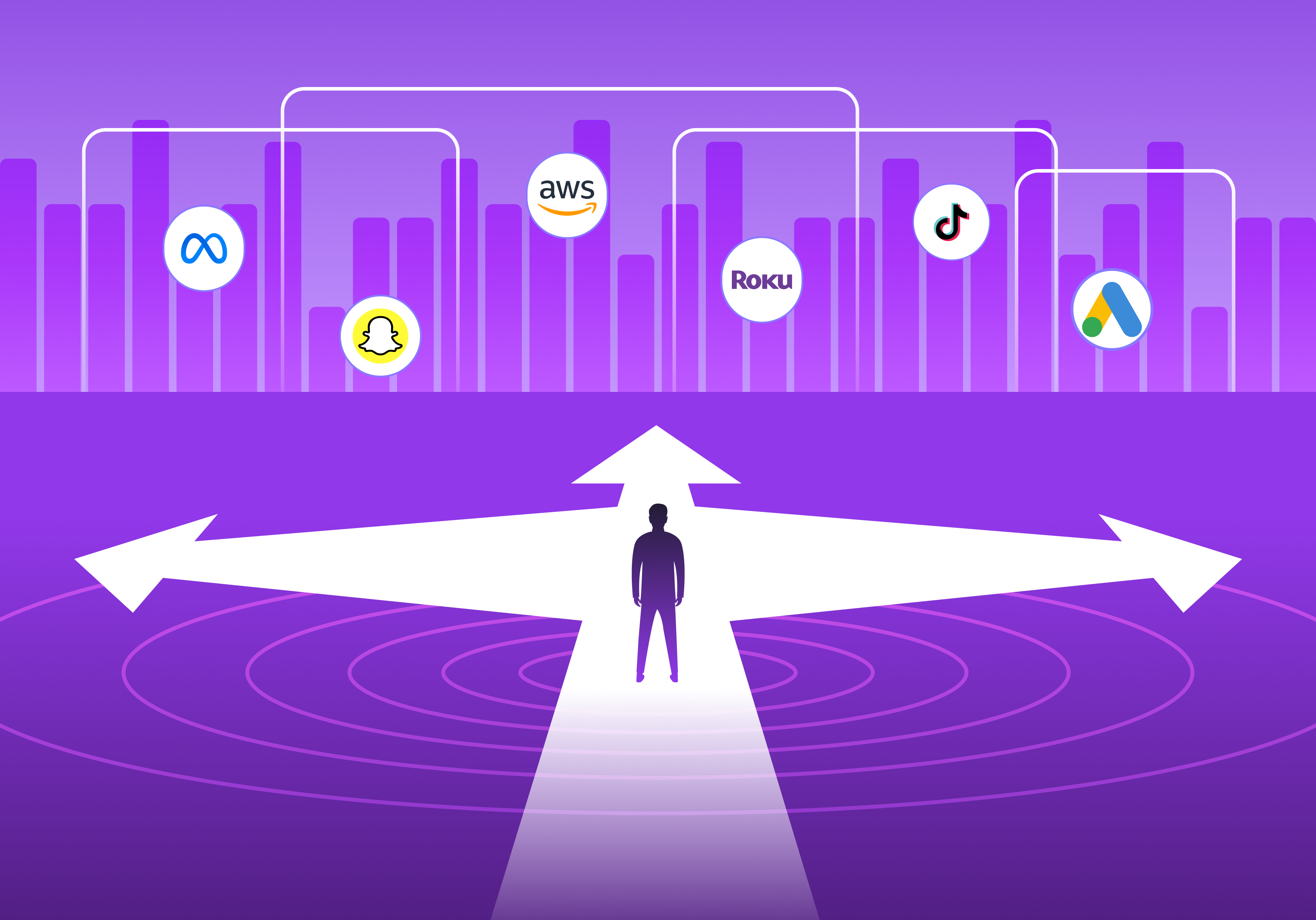

As any smart marketer will tell you, measurement alone isn't a strategy. It’s absolutely essential (and never won’t be), but it’s not enough on its own. Historically, measurement solutions provided insights into what happened after a campaign finished. Unfortunately, despite evolutions in measurement, marketers today still deal with fragmented channels and tools, and are left struggling to translate post-campaign insights into action before they become irrelevant.
In this era of advertising, the brands that turn measurement into real-time decisioning are quickly taking the lead.
Measurement is a Signal to Activate (Not the Whole Strategy)
For years, measurement has been treated like the finish line. Launch the campaign, review the results of the campaign, share what worked, and then optimize for the next round. It’s become a familiar rhythm, but it isn’t at scale.
What if instead of only reviewing the results at the end, we check in on them periodically throughout the campaign? Taking frequent snapshots to review the results and make tactical adjustments so you have time to learn from the insights while they’re still relevant, instead of waiting until it’s too late.
Today’s advertising moves too quickly for insights that are only available after budget has been spent. By the time a campaign has ended, behavior may have shifted and the next campaign may already be in motion.
Here, measurement is still valuable, but it can’t sit at the end of the process. The true value comes from what marketers can do with their data. In an ideal world, it guides budget shifts, creative decisions, and channel strategy, all while there’s still time to improve performance.
Dashboards Create More Questions than Answers
The modern marketing stack gives teams plenty to review. Every platform has its own version of performance, with each report arriving with a slightly different version of the truth. With an increase in visibility often comes a decrease in clarity, particularly with multiple dashboards to manage.
That’s why the conversation needs to move beyond measurement to omni-channel systems that help marketers understand which actions are worth taking and give them the confidence to act while they can move the needle. (Otherwise, they’re left translating data into decisions manually, which is a lot to ask from people who already have seventeen tabs open and a meeting invite for a “quick sync.”)
Incrementality Turns Measurement into Momentum
That’s why incrementality is increasingly becoming the industry standard when it comes to measurement. Incrementality helps marketers understand what their campaigns actually caused (and which initiatives should get credit for influencing results), not just what happened while those campaigns were running. That difference is critical. Without it, teams can over-credit channels, misread performance, or optimize toward activity that looks productive but does not create meaningful growth.
The opportunity now is to make incrementality more continuous and connected to activation. Instead of treating it as a retrospective report, brands can use always-on incrementality signals to guide optimization across channels. This makes measurement more actionable because it becomes part of how decisions are made in real time.
With continuous incrementality, marketers can ask better questions while campaigns are still moving, like...
- Where is spend creating true lift?
- Which channels are contributing incremental value?
- Which creative choices are helping performance (and which ones are just along for the ride)?
The Growth Loop Has to be Connected
The best marketing systems connect the entire workflow, from planning to activation and optimization to proof.
Modern advertising decisions are not isolated, with planning affecting activation, activation affecting optimization, and so on. In many organizations, those steps are still disconnected, happening in siloed tools across different teams. Without someone manually connecting the dots across dashboards and channels, key growth opportunities are missed.
Smartly’s new acquisition of INCRMNTAL solves this by creating a more unified system that brings causal measurement closer to activation. Instead of treating incrementality as something marketers check after a campaign has run, it becomes part of how campaigns are planned and executed.
The result is a smarter decisioning loop where marketers can move from fragmented attribution to real-time, causal optimization.
The Advantage Belongs To Better Decision-Makers
The best marketing teams are not the ones with the most dashboards (although maybe there should be an award for that?). In 2026 and beyond, effective marketing teams decide faster and optimize for incremental impact.
Measurement will always be essential, but it will never be the whole strategy. It becomes powerful when it helps teams optimize faster, reduce waste, and invest in opportunities that create true incremental impact.
Marketers need clearer decisions, connected workflows, and confidence that every optimization is moving them closer to growth. That is the shift from measurement to decisioning, and it is where modern advertising is headed.


Honestly, we'd rather just show you.
Chat with our team to see how Smartly transforms the fragmented advertising ecosystem into something suspiciously manageable.



%201%20(1)%201%201.avif)

