
Timbaland on Staying Distinctive When Everyone Has the Same Tools: ADVANCE Recap
What happens to creativity when almost anything becomes possible?
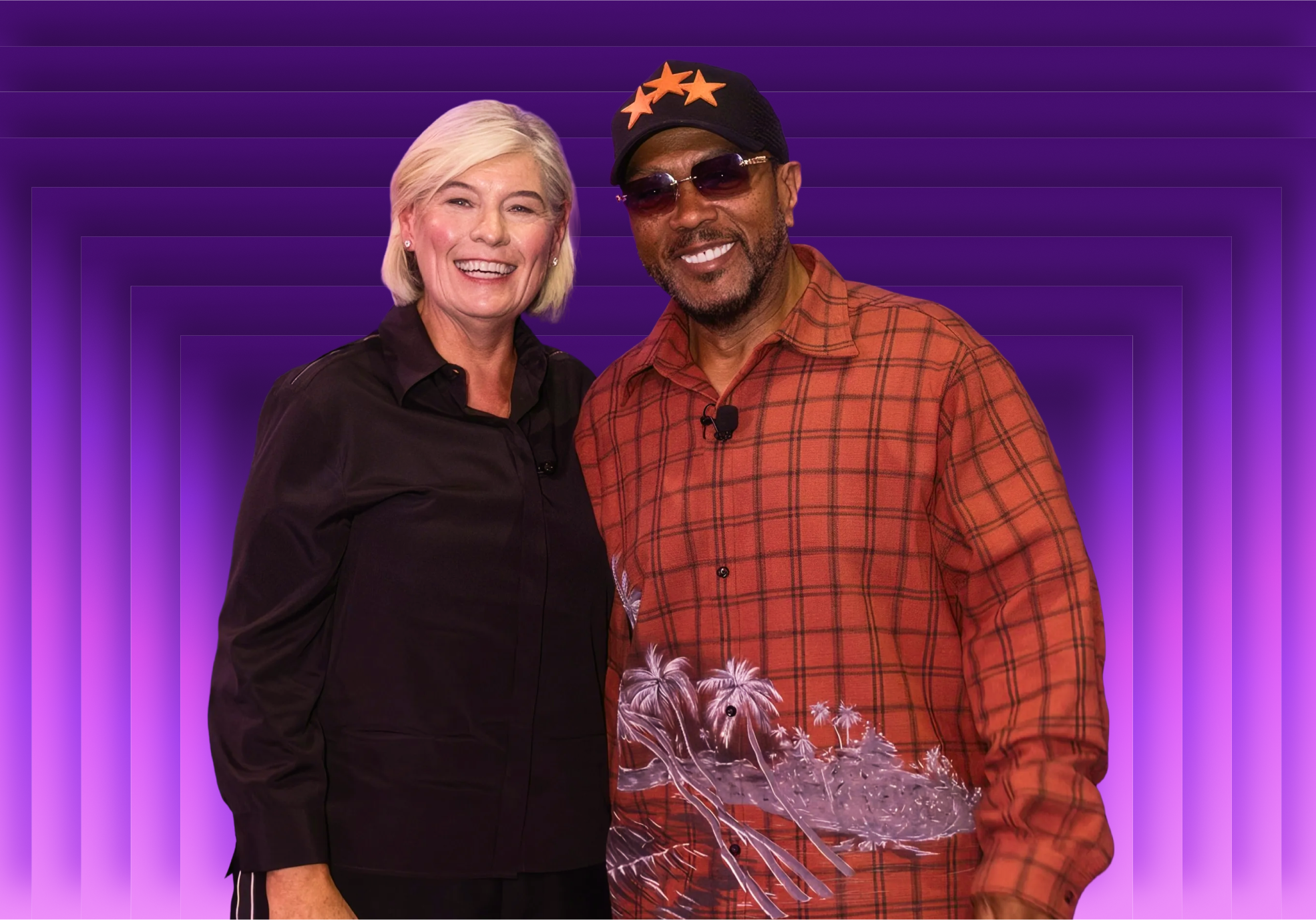
That was the question running through Timbaland’s conversation at ADVANCE 2026. The four-time Grammy Award winner and an inimitable member of the Songwriters Hall of Fame sat down with Smartly CEO Laura Desmond for a conversation about the relationship between technology and creative identity at ADVANCE.
The legendary producer reflected on music’s digital transformation, the role of AI, and the creative value of working with limitations.
His answer was both optimistic and cautionary: technology can help us move faster, but it cannot decide what is worth making.
And when everyone has access to the same tools, that decision—the human one—becomes the difference.
Before the tools, there was the table
Timbaland’s creative process did not begin with unlimited access to technology. It began with whatever was around him. He talked about beating on tables, using his glasses to mimic sounds, and finding music in the ordinary details of the world. To him, those limitations didn’t show up as constraints. They trained him to listen.
Then the tools evolved. When samplers became available, they didn’t replace his creativity. They gave him new ways to use it. A table, a laugh from outside, or an unexpected noise could become part of a track.
The tool expanded the possibilities. His creative instinct still came first.
AI can accelerate the process. It cannot supply the point of view.
Timbaland sees AI as a companion, not a replacement for the human creative process. He compared it to choosing between an analog keyboard and a computer. Both are tools, but neither is the artist.
AI can speed up the work, but only if the person using it knows how to operate it. What looks like the click of a button often depends on everything that happens before the click: the intention, the prompt, the taste, and the ability to recognize whether the result is useful.
That's where the human process remains essential.
AI can generate an answer. It cannot necessarily tell you whether it is the right answer. It can produce something technically polished while missing the feeling, tension, or surprise that makes the work matter.
As Timbaland suggested, the sky is no longer the limit. It’s simply a view. The challenge is learning to see what is possible without assuming that every possibility deserves to exist.
The tool is only part of the story
One of Timbaland’s most compelling points was that the tool itself is never the whole creative idea. The story someone brings to the tool matters just as much.
AI can help more people communicate what they are imagining, including people who may not be able to sing, produce, or create a traditional demo. It can help a songwriter turn an idea into something others can hear. It can help collaborators move more quickly from a feeling to a form.
But collaboration isn't only about speed. It's also about translation. Timbaland described the hardest part of working with other artists as finding the communication boundary between them: explaining your flow, understanding someone else’s, and bringing the art in both people’s heads into the real world.
AI can make that easier when it is used strategically—as a teammate that helps people get to the idea faster, It still can't do the human work of listening, interpreting, and building trust.
AI knows the past. People decide what happens next.
Timbaland also offered a useful way to think about AI’s relationship with originality. AI can draw from an enormous archive of past work. It can recognize patterns, recombine influences, and surface ideas based on what has already existed. But originality does not come from repeating the past. It comes from knowing how to flip it.
Think of an old record in a record store. The record may be decades old, but the right producer can hear something in it that no one else heard before. The creative act is not simply finding the sample. It is deciding what to do with it.
That's the role of taste, curation, and judgment. AI can capture the past. People make it feel current.
For marketers, that distinction is increasingly important. When the same platforms, models, and production tools are available to everyone, a distinctive point of view becomes even more valuable. The question is no longer whether a team can create more variations. It is whether those variations feel relevant, recognizable, and worth someone’s attention.
Faster does not mean finished
AI can help creatives get to the “meat and potatoes” of an idea quickly. But making something meaningful still takes time. In fact, Timbaland suggested that AI can allow him to stay in the creative process longer. When the mechanics move faster, there is more room to explore, refine, and push an idea further.
That is a more useful definition of efficiency. The goal isn't to rush through creativity. It's to remove unnecessary friction so people can spend more time making decisions that only people can make. The faster you reach the starting point, the more time you have to decide where the work should go.
The threat is not AI. It is creative complacency.
Timbaland doesn't see AI itself as the threat. The greater risk is what happens when people stop exercising their judgment. Comfort can take over.
In music, that might mean relying on familiar patterns because they are easy to reproduce. In marketing, it might mean accepting the first acceptable output, repeating what worked last time, or confusing scale with originality.
The strongest creative work still requires someone to decide what to keep, what to reject, what to change, and what to make their own.
That is also how Timbaland defines success. It is not ultimately about money or material things. It is about who you are as a person and how you serve others through what you create.
What marketers can take away
Timbaland’s conversation offered a timely lesson for any industry trying to navigate AI:
- More tools do not guarantee more original ideas.
- AI works best as a creative partner, not an autonomous decision-maker.
- Human judgment, taste, and curation become more valuable as output increases.
- Collaboration still depends on communication and trust.
- The goal of AI should be to create more room for meaningful work—not to remove the human process from it.
The future will not belong to the marketers with the most tools. It will belong to the marketers who know how to use those tools without losing the point of view that makes their work worth noticing.
At ADVANCE 2026, Timbaland made the case for a simple idea: when everyone has access to the same technology, the most distinctive thing left is how you think.
Stay tuned as we continue the conversation. Over the next several weeks, we’ll share more insights you missed at ADVANCE.
Timbaland on Staying Distinctive When Everyone Has the Same Tools: ADVANCE Recap

What happens to creativity when almost anything becomes possible?
That was the question running through Timbaland’s conversation at ADVANCE 2026. The four-time Grammy Award winner and an inimitable member of the Songwriters Hall of Fame sat down with Smartly CEO Laura Desmond for a conversation about the relationship between technology and creative identity at ADVANCE.
The legendary producer reflected on music’s digital transformation, the role of AI, and the creative value of working with limitations.
His answer was both optimistic and cautionary: technology can help us move faster, but it cannot decide what is worth making.
And when everyone has access to the same tools, that decision—the human one—becomes the difference.
Before the tools, there was the table
Timbaland’s creative process did not begin with unlimited access to technology. It began with whatever was around him. He talked about beating on tables, using his glasses to mimic sounds, and finding music in the ordinary details of the world. To him, those limitations didn’t show up as constraints. They trained him to listen.
Then the tools evolved. When samplers became available, they didn’t replace his creativity. They gave him new ways to use it. A table, a laugh from outside, or an unexpected noise could become part of a track.
The tool expanded the possibilities. His creative instinct still came first.
AI can accelerate the process. It cannot supply the point of view.
Timbaland sees AI as a companion, not a replacement for the human creative process. He compared it to choosing between an analog keyboard and a computer. Both are tools, but neither is the artist.
AI can speed up the work, but only if the person using it knows how to operate it. What looks like the click of a button often depends on everything that happens before the click: the intention, the prompt, the taste, and the ability to recognize whether the result is useful.
That's where the human process remains essential.
AI can generate an answer. It cannot necessarily tell you whether it is the right answer. It can produce something technically polished while missing the feeling, tension, or surprise that makes the work matter.
As Timbaland suggested, the sky is no longer the limit. It’s simply a view. The challenge is learning to see what is possible without assuming that every possibility deserves to exist.
The tool is only part of the story
One of Timbaland’s most compelling points was that the tool itself is never the whole creative idea. The story someone brings to the tool matters just as much.
AI can help more people communicate what they are imagining, including people who may not be able to sing, produce, or create a traditional demo. It can help a songwriter turn an idea into something others can hear. It can help collaborators move more quickly from a feeling to a form.
But collaboration isn't only about speed. It's also about translation. Timbaland described the hardest part of working with other artists as finding the communication boundary between them: explaining your flow, understanding someone else’s, and bringing the art in both people’s heads into the real world.
AI can make that easier when it is used strategically—as a teammate that helps people get to the idea faster, It still can't do the human work of listening, interpreting, and building trust.
AI knows the past. People decide what happens next.
Timbaland also offered a useful way to think about AI’s relationship with originality. AI can draw from an enormous archive of past work. It can recognize patterns, recombine influences, and surface ideas based on what has already existed. But originality does not come from repeating the past. It comes from knowing how to flip it.
Think of an old record in a record store. The record may be decades old, but the right producer can hear something in it that no one else heard before. The creative act is not simply finding the sample. It is deciding what to do with it.
That's the role of taste, curation, and judgment. AI can capture the past. People make it feel current.
For marketers, that distinction is increasingly important. When the same platforms, models, and production tools are available to everyone, a distinctive point of view becomes even more valuable. The question is no longer whether a team can create more variations. It is whether those variations feel relevant, recognizable, and worth someone’s attention.
Faster does not mean finished
AI can help creatives get to the “meat and potatoes” of an idea quickly. But making something meaningful still takes time. In fact, Timbaland suggested that AI can allow him to stay in the creative process longer. When the mechanics move faster, there is more room to explore, refine, and push an idea further.
That is a more useful definition of efficiency. The goal isn't to rush through creativity. It's to remove unnecessary friction so people can spend more time making decisions that only people can make. The faster you reach the starting point, the more time you have to decide where the work should go.
The threat is not AI. It is creative complacency.
Timbaland doesn't see AI itself as the threat. The greater risk is what happens when people stop exercising their judgment. Comfort can take over.
In music, that might mean relying on familiar patterns because they are easy to reproduce. In marketing, it might mean accepting the first acceptable output, repeating what worked last time, or confusing scale with originality.
The strongest creative work still requires someone to decide what to keep, what to reject, what to change, and what to make their own.
That is also how Timbaland defines success. It is not ultimately about money or material things. It is about who you are as a person and how you serve others through what you create.
What marketers can take away
Timbaland’s conversation offered a timely lesson for any industry trying to navigate AI:
- More tools do not guarantee more original ideas.
- AI works best as a creative partner, not an autonomous decision-maker.
- Human judgment, taste, and curation become more valuable as output increases.
- Collaboration still depends on communication and trust.
- The goal of AI should be to create more room for meaningful work—not to remove the human process from it.
The future will not belong to the marketers with the most tools. It will belong to the marketers who know how to use those tools without losing the point of view that makes their work worth noticing.
At ADVANCE 2026, Timbaland made the case for a simple idea: when everyone has access to the same technology, the most distinctive thing left is how you think.
Stay tuned as we continue the conversation. Over the next several weeks, we’ll share more insights you missed at ADVANCE.


Honestly, we'd rather just show you.
Chat with our team to see how Smartly transforms the fragmented advertising ecosystem into something suspiciously manageable.


%201%20(1)%201%201.avif)

