
The Future of Marketing AI: Automation With Human Oversight
For a while, the conversation around AI in marketing revolved around a single question:
How much of this can automation take over?
If AI could write copy, generate images, and optimize campaigns, the logic went, maybe marketing teams could eventually run themselves.
But as companies began deploying AI at scale, something interesting surfaced. The most effective marketing teams aren’t removing all humans from the process. They’re redesigning workflows so humans and AI work together.
The early narrative imagined fully automated marketing teams. The reality looks more like collaboration.
AI Has Moved From Hype to Operations
Not long ago, AI in marketing was mostly experimental.
Teams used generative tools to write headlines, create images, or test new creative concepts. The technology was promising, but it rarely touched the core of how campaigns actually ran.
That’s changing quickly. Today, AI is becoming part of the operating infrastructure of modern marketing teams. Campaign planning, creative production, media buying, and optimization increasingly rely on AI-powered systems.
Smartly research shows the shift is already underway:
- Roughly 60% of marketing teams globally report they have fully "invested" in AI for live campaign optimization.
- 95% of marketers use generative AI for visual asset creation or optimization. Furthermore, nearly 50% are actively integrating AI across both their campaign setup and creative processes.
- 1 in 3 marketers already rely on AI for predictive modeling and creative validation before a single ad is launched. This shift is accelerating rapidly, with 86% planning to expand these pre-launch predictive capabilities in 2026.
In other words, AI is no longer just a low-budget experiment. It’s becoming part of how marketing teams actually work.
Marketing leaders are asking more practical questions:
- How much decision-making should automation control?
- How do brands maintain trust when algorithms influence creative and messaging?
- How can teams scale creative production without overwhelming designers?
The focus is no longer on what AI can do. It’s on how teams should use it effectively inside real marketing workflows.
Creative Scale is Becoming a Competitive Advantage
One of the biggest shifts in digital advertising is the explosion of creative demand. Modern campaigns require far more assets than they did even a few years ago. A single campaign might need hundreds, or even thousands, of creative variations across formats, placements, and audiences.
New formats, new placements, and personalized messaging across audiences mean marketing teams must produce hundreds of creative variations for a single campaign.
At the same time, consumer expectations are rising:
- Consumers expect brands to be relevant, creative, and to make a personal connection with them.
- To meet these evolving expectations, savvy marketers are building faster and smarter systems that blend AI, data, and creativity to deliver personalized content at scale.
For many teams, this creates a familiar tension:
Creative teams want to protect brand quality and storytelling. Performance teams want to test everything. AI is helping bridge that gap. Instead of replacing creative teams, AI allows them to scale ideas more efficiently, generating variations, formats, and localizations while humans focus on the core concept.
In this environment, creative scale is a strategic advantage.
Marketing is Built for Human-AI Collaboration
Marketing has always required two very different capabilities.
On one side, there’s scale and analysis: testing creative variations, identifying patterns in performance data, optimizing budgets across channels.
On the other side, there’s creativity and judgment: understanding cultural context, shaping brand narratives, and deciding which ideas deserve attention.
AI excels at the first. Humans excel at the second. That’s why marketing has become one of the clearest examples of effective human-AI collaboration.
AI can generate thousands of creative variations in seconds. But humans decide which ones reflect the brand or when a joke simply doesn’t land.
AI can analyze massive volumes of performance data. But humans interpret the results and decide what to do next.
The most successful marketing teams combine both.
Automation Works Best When Humans Guide It
The concept often described as human-in-the-loop AI is simple but powerful. Instead of building systems that operate independently, organizations design workflows where:
- AI performs high-speed analysis and execution
- Humans guide strategy, priorities, and decisions
In marketing, that collaboration might look like this:
- Humans define the strategy. The marketing team decides the audience, the goals, and the story a campaign should tell.
- AI scales execution. It generates creative variations, runs tests, and optimizes delivery across channels.
- Humans interpret the results. The marketing team evaluates performance, refines messaging, and adjusts strategy.
The result is a system where campaigns improve faster without sacrificing brand quality or creative integrity.
Where AI Alone Falls Short
Despite its capabilities, AI still struggles with areas that are essential to marketing.
Context
AI models can generate content, but they don’t fully understand brand nuance, cultural moments, or shifting audience sentiment.
Strategy
AI can optimize toward defined goals, but it can’t determine which goals matter most for a business.
Trust
Brands need transparency and accountability in how decisions are made—especially when algorithms influence messaging and targeting.
What this means in practice
These limitations become more visible as companies deploy AI at scale. Automation can accelerate execution, but without human oversight, it can also introduce risk. That’s why the conversation around AI adoption increasingly centers on governance, trust, and responsible implementation.
The most forward-thinking companies aren’t asking how to remove humans from the system. They’re asking where human judgment matters most.
The New Marketing Workflow
The emerging marketing playbook reflects this shift.
Instead of treating AI as a replacement for human work, leading teams use it to amplify human expertise.
A modern campaign workflow increasingly looks like this:
- Human-led strategy: Teams define campaign objectives, audiences, and messaging direction.
- AI-assisted creative production: AI generates multiple creative variations and formats at scale.
- AI-driven optimization: Performance data identifies which combinations resonate most with audiences.
- Human-led refinement: Marketers interpret results and evolve the strategy.
This cycle repeats continuously, allowing campaigns to improve faster while staying aligned with brand identity.
Why Collaboration is the Future of Advertising Technology
As AI becomes embedded in marketing infrastructure, the platforms that succeed will not be the ones that promise full automation and human replacement. They will be the ones designed to make humans more efficient through collaboration.
The most effective systems share three characteristics:
- Automation with control
AI accelerates execution, but humans remain the decision-makers.
- Creative scale
AI expands the number of ideas teams can test and refine.
- Continuous learning
Human insight turns performance data into better strategy.
Together, these capabilities create something marketing teams have always wanted but rarely achieved: the ability to combine creativity, speed, and precision at scale.
How Smartly Powers Human-AI Collaborative Marketing
At Smartly, our approach to AI reflects the same principle shaping the future of marketing: automation should expand human capability, not replace it. In practice, that means designing systems where AI accelerates execution, while marketers remain in control of strategy and creative direction.
Creative scale without human oversight
Smartly’s Dynamic Creative Optimization leverages AI to generate and adapt creative across formats, audiences, and placements, while marketing teams decide which ideas align with their brand.
Automation that supports strategy decisions
Smartly Brand Pulse uses AI to analyze performance data and surfaces insights, allowing marketers to focus on interpreting results and refining campaigns, not jumping between siloed platforms.
Connected workflows across Media and Creative
Smartly unites creative product, campaign management, and optimization into one platform so teams can move faster, while maintaining visibility and control.
The result is exactly what modern marketing teams need: the ability to scale campaigns, test ideas, and optimize performance, without losing the human judgement or the creative spark that defines great marketing.
The Future Belongs to Augmented Marketers
AI will continue transforming marketing in the years ahead.
Creative production will become faster. Campaigns will adapt in real time. Data analysis will reach levels that were previously impossible.
The organizations seeing the greatest impact from AI aren’t trying to eliminate human expertise. They’re investing in systems that make marketers more powerful.
Automation handles complexity. Humans provide direction. Together, they unlock a new marketing playbook.
Because the best approach to using AI doesn’t replace marketers. It recognizes they’re indispensable to great work.
The Future of Marketing AI: Automation With Human Oversight
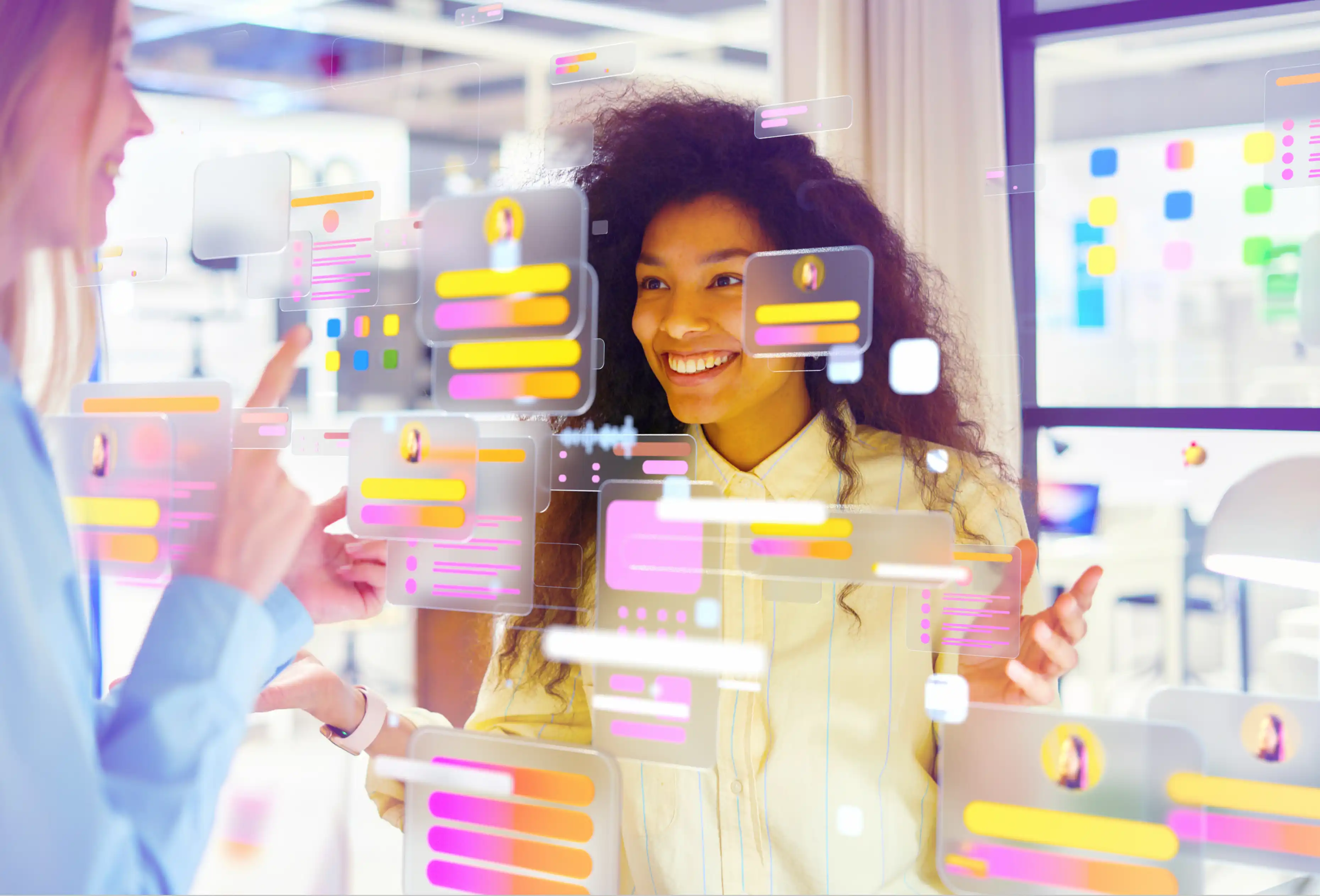

For a while, the conversation around AI in marketing revolved around a single question:
How much of this can automation take over?
If AI could write copy, generate images, and optimize campaigns, the logic went, maybe marketing teams could eventually run themselves.
But as companies began deploying AI at scale, something interesting surfaced. The most effective marketing teams aren’t removing all humans from the process. They’re redesigning workflows so humans and AI work together.
The early narrative imagined fully automated marketing teams. The reality looks more like collaboration.
AI Has Moved From Hype to Operations
Not long ago, AI in marketing was mostly experimental.
Teams used generative tools to write headlines, create images, or test new creative concepts. The technology was promising, but it rarely touched the core of how campaigns actually ran.
That’s changing quickly. Today, AI is becoming part of the operating infrastructure of modern marketing teams. Campaign planning, creative production, media buying, and optimization increasingly rely on AI-powered systems.
Smartly research shows the shift is already underway:
- Roughly 60% of marketing teams globally report they have fully "invested" in AI for live campaign optimization.
- 95% of marketers use generative AI for visual asset creation or optimization. Furthermore, nearly 50% are actively integrating AI across both their campaign setup and creative processes.
- 1 in 3 marketers already rely on AI for predictive modeling and creative validation before a single ad is launched. This shift is accelerating rapidly, with 86% planning to expand these pre-launch predictive capabilities in 2026.
In other words, AI is no longer just a low-budget experiment. It’s becoming part of how marketing teams actually work.
Marketing leaders are asking more practical questions:
- How much decision-making should automation control?
- How do brands maintain trust when algorithms influence creative and messaging?
- How can teams scale creative production without overwhelming designers?
The focus is no longer on what AI can do. It’s on how teams should use it effectively inside real marketing workflows.
Creative Scale is Becoming a Competitive Advantage
One of the biggest shifts in digital advertising is the explosion of creative demand. Modern campaigns require far more assets than they did even a few years ago. A single campaign might need hundreds, or even thousands, of creative variations across formats, placements, and audiences.
New formats, new placements, and personalized messaging across audiences mean marketing teams must produce hundreds of creative variations for a single campaign.
At the same time, consumer expectations are rising:
- Consumers expect brands to be relevant, creative, and to make a personal connection with them.
- To meet these evolving expectations, savvy marketers are building faster and smarter systems that blend AI, data, and creativity to deliver personalized content at scale.
For many teams, this creates a familiar tension:
Creative teams want to protect brand quality and storytelling. Performance teams want to test everything. AI is helping bridge that gap. Instead of replacing creative teams, AI allows them to scale ideas more efficiently, generating variations, formats, and localizations while humans focus on the core concept.
In this environment, creative scale is a strategic advantage.
Marketing is Built for Human-AI Collaboration
Marketing has always required two very different capabilities.
On one side, there’s scale and analysis: testing creative variations, identifying patterns in performance data, optimizing budgets across channels.
On the other side, there’s creativity and judgment: understanding cultural context, shaping brand narratives, and deciding which ideas deserve attention.
AI excels at the first. Humans excel at the second. That’s why marketing has become one of the clearest examples of effective human-AI collaboration.
AI can generate thousands of creative variations in seconds. But humans decide which ones reflect the brand or when a joke simply doesn’t land.
AI can analyze massive volumes of performance data. But humans interpret the results and decide what to do next.
The most successful marketing teams combine both.
Automation Works Best When Humans Guide It
The concept often described as human-in-the-loop AI is simple but powerful. Instead of building systems that operate independently, organizations design workflows where:
- AI performs high-speed analysis and execution
- Humans guide strategy, priorities, and decisions
In marketing, that collaboration might look like this:
- Humans define the strategy. The marketing team decides the audience, the goals, and the story a campaign should tell.
- AI scales execution. It generates creative variations, runs tests, and optimizes delivery across channels.
- Humans interpret the results. The marketing team evaluates performance, refines messaging, and adjusts strategy.
The result is a system where campaigns improve faster without sacrificing brand quality or creative integrity.
Where AI Alone Falls Short
Despite its capabilities, AI still struggles with areas that are essential to marketing.
Context
AI models can generate content, but they don’t fully understand brand nuance, cultural moments, or shifting audience sentiment.
Strategy
AI can optimize toward defined goals, but it can’t determine which goals matter most for a business.
Trust
Brands need transparency and accountability in how decisions are made—especially when algorithms influence messaging and targeting.
What this means in practice
These limitations become more visible as companies deploy AI at scale. Automation can accelerate execution, but without human oversight, it can also introduce risk. That’s why the conversation around AI adoption increasingly centers on governance, trust, and responsible implementation.
The most forward-thinking companies aren’t asking how to remove humans from the system. They’re asking where human judgment matters most.
The New Marketing Workflow
The emerging marketing playbook reflects this shift.
Instead of treating AI as a replacement for human work, leading teams use it to amplify human expertise.
A modern campaign workflow increasingly looks like this:
- Human-led strategy: Teams define campaign objectives, audiences, and messaging direction.
- AI-assisted creative production: AI generates multiple creative variations and formats at scale.
- AI-driven optimization: Performance data identifies which combinations resonate most with audiences.
- Human-led refinement: Marketers interpret results and evolve the strategy.
This cycle repeats continuously, allowing campaigns to improve faster while staying aligned with brand identity.
Why Collaboration is the Future of Advertising Technology
As AI becomes embedded in marketing infrastructure, the platforms that succeed will not be the ones that promise full automation and human replacement. They will be the ones designed to make humans more efficient through collaboration.
The most effective systems share three characteristics:
- Automation with control
AI accelerates execution, but humans remain the decision-makers.
- Creative scale
AI expands the number of ideas teams can test and refine.
- Continuous learning
Human insight turns performance data into better strategy.
Together, these capabilities create something marketing teams have always wanted but rarely achieved: the ability to combine creativity, speed, and precision at scale.
How Smartly Powers Human-AI Collaborative Marketing
At Smartly, our approach to AI reflects the same principle shaping the future of marketing: automation should expand human capability, not replace it. In practice, that means designing systems where AI accelerates execution, while marketers remain in control of strategy and creative direction.
Creative scale without human oversight
Smartly’s Dynamic Creative Optimization leverages AI to generate and adapt creative across formats, audiences, and placements, while marketing teams decide which ideas align with their brand.
Automation that supports strategy decisions
Smartly Brand Pulse uses AI to analyze performance data and surfaces insights, allowing marketers to focus on interpreting results and refining campaigns, not jumping between siloed platforms.
Connected workflows across Media and Creative
Smartly unites creative product, campaign management, and optimization into one platform so teams can move faster, while maintaining visibility and control.
The result is exactly what modern marketing teams need: the ability to scale campaigns, test ideas, and optimize performance, without losing the human judgement or the creative spark that defines great marketing.
The Future Belongs to Augmented Marketers
AI will continue transforming marketing in the years ahead.
Creative production will become faster. Campaigns will adapt in real time. Data analysis will reach levels that were previously impossible.
The organizations seeing the greatest impact from AI aren’t trying to eliminate human expertise. They’re investing in systems that make marketers more powerful.
Automation handles complexity. Humans provide direction. Together, they unlock a new marketing playbook.
Because the best approach to using AI doesn’t replace marketers. It recognizes they’re indispensable to great work.


Honestly, we'd rather just show you.
Chat with our team to see how Smartly transforms the fragmented advertising ecosystem into something suspiciously manageable.


%201%20(1)%201%201.avif)

